
In the early 1960s test drilling was carried out and 98% purity Gypsum rock was discovered.
The decision was made to sink a mine just off Fenton Lane in Sherburn, adjacent to Hudsons Farm. The rich seam of Gypsum rises close to the surface near the old A1 but this location was not used and Fenton Lane was chosen.
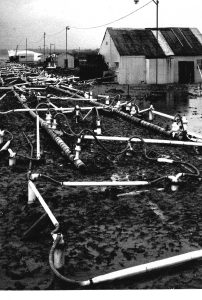
In 1965 the sinking of No1 mine was started but it collapsed early into the excavation. The ground was frozen to enable the successful sinking of the No2 Mine.The ground was too soft near the surface and the picture below shows the pipes used to freeze the ground.
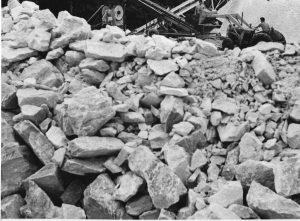
In 1968 the first rock was brought to the surface. The mining of the rock started at least a year before the factory was completed and a large stockpile of Gypsum rock (shown below) was created in preparation for production of Plasterboard in the factory.
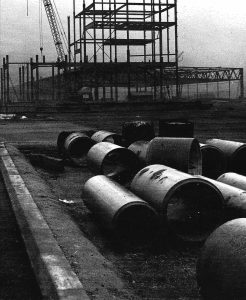
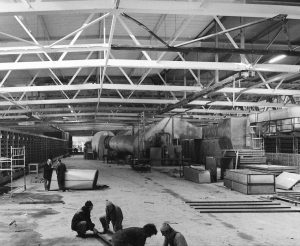
In 1969 the ground works started on the factory including the production line, mill and warehouse. Early stages of the fabrication work is shown below.
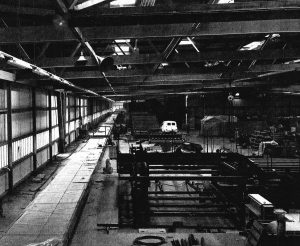
Once the fabrication work had finished the installation of No1 Board Plant started. Most of the equipment was purchased from ICI in Bristol. There were 2 Plasterboard lines in Bristol. One was used at Sherburn and the other was put in at another British Gypsum plant at Kirkby Thore in Cumbria.
The board plant forming line is to the left of the picture below and the Take Off section under construction at the bottom.
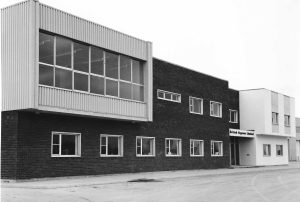
The factory and offices were completed in 1971 at a cost of £1m. The office building, shown below, included offices, reception, training room, first aid room and canteen.
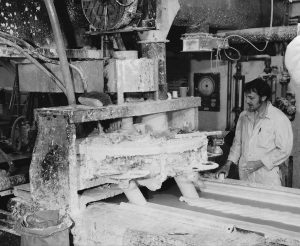
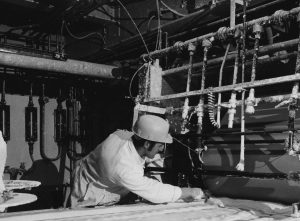
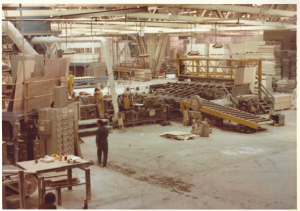
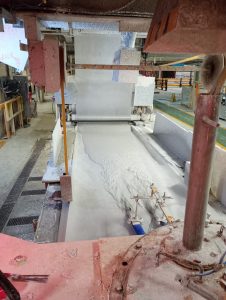
After a few trial runs the No1 Board Plant was up and running in the spring of 1971 producing various widths, thickness and lengths of plasterboard. The pictures below show the Board Plant mixer where the plaster is made (slurry) which then flows onto the paper and is formed into one long line of plasterboard at the extruder and then the Take Off where the Plasterboard is trimmed to size and stacked onto pallets.
The factory building was extended in 1974 to accommodate another Plasterboard line. The No2 Plasterboard line was installed the same year. It was capable of producing a higher volume of product and was built around the outside of the No1 Plasterboard line.
Photo below showing the construction of the No2 Board Plant drying section on the left with the No1 Board Plant drying section on the right.
1974 Mine has an ingress of water. There are quite a few underground lakes and streams in the area and in 1974 water was found. The flow was of a high rate and it took several weeks to stop the flow and seal the damaged Gypsum face.
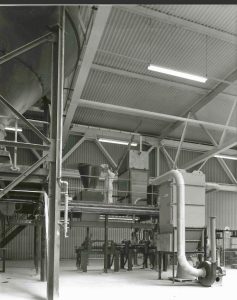
In 1976 the Cove Plant was built. Coving was already produced at 2 other British Gypsum sites in the UK but the rise in popularity gave way to another extension of the building at Sherburn to accommodate a Coving line in 1976. The line was extended in 1978 to enable an increase from 25 metres per minute to 40 metres per minute in production. Here we see David Chapman filling one of the additive silos used in the making of coving.
1987 Water ingress again and the mine was closed. The mine once again fell foul of the geology in the area. Due to the location of Gascoigne wood and the RAF camp at Church Fenton there was only one direction the mining of Gypsum could go. Therefore with the second ingress of water the decision was made to close the mine.
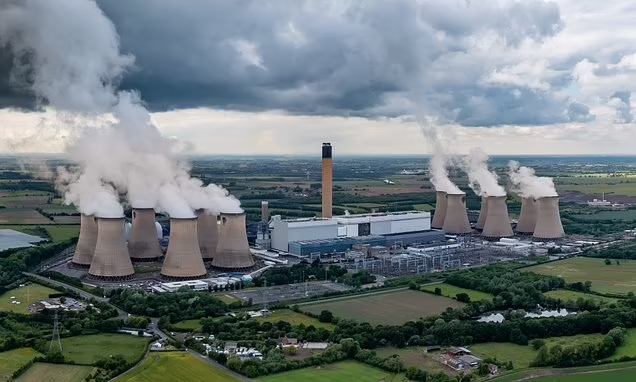
1989 contract signed to take DSG from Drax power station.With the mine closed rock was imported from Spain to keep the site going. Then in 1989 it was agreed that Sherburn would take the DSG (Desulphurised Gypsum) from Drax power station (below)
1992 No1 Plasterboard plant converted to make GRG board. The No1 Plasterboard line had been closed down in 1989 followed in 1990 by the No2 Plasterboard line leaving just the Coving line running. Production of GRG board (Glasroc Gypsum) was moved from the Staunton site in Nottinghamshire in 1992 and replaced the old No1 Plasterboard line giving a greater production capacity.
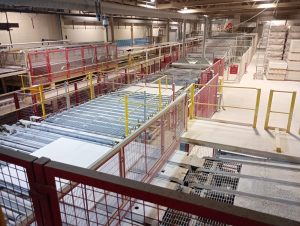
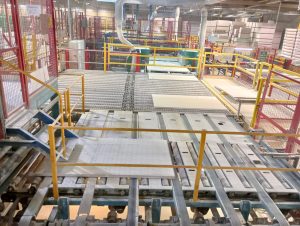
2006 Major upgrade at Sherburn.
In 2005 BPB Ltd (parent company of British Gypsum) announced a major capital investment at Sherburn. The Mill was expanded, a DSG store built and the old No2 Plasterboard line was taken out and replaced with a new state of the art line. The new line has the capacity to produce the same amount of product as both the old No1 and No2 lines combined. The work was completed and production started at the beginning of 2007. Photo below shows work in progress on the new DSG store and the new mill taking shape at the top left of the picture.
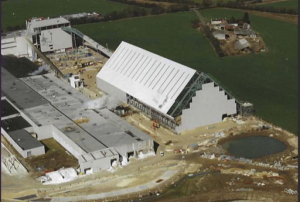
Mill converted to use rock instead of DSG. With the decline in supply of DSG from Drax power station due to the change from FGD production (Flue Gas Desulphurisation) to Biomass. Sherburn converted back to using rock imported from Spain.
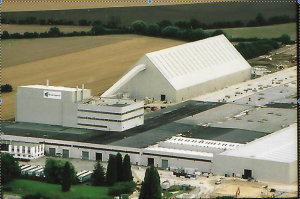
The Sherburn site celebrated 50years in 2019 and continues to be a success to this day.
Many thanks to Grahame Shipley for all the content of this page.